
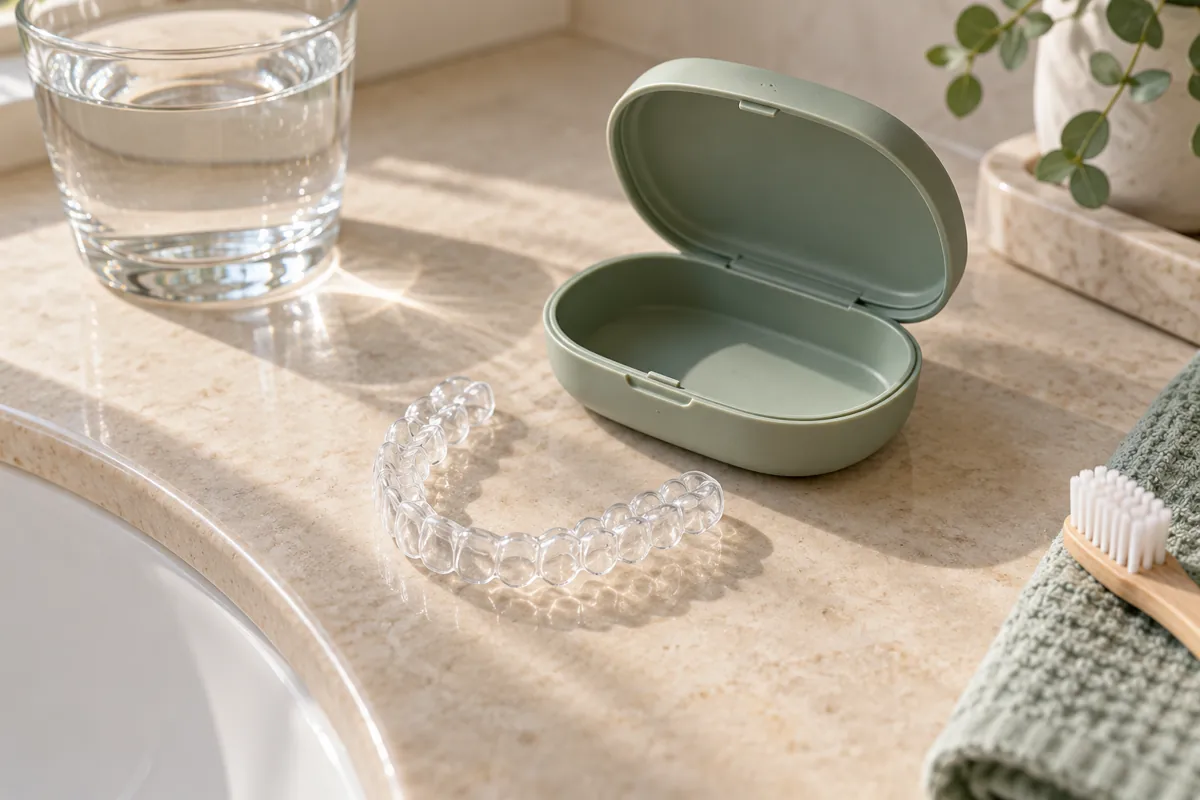
Finishing tooth alignment opens a new stage. Understanding retention, organising everyday care and knowing what to do if your appliance stops fitting.
The day your appliances are removed often feels like a finish line. You have reorganised meals, attended reviews and watched your teeth change position. Yet removing aligners or braces does not mean your mouth stops changing. Retention aims to preserve the position achieved and deserves explanations just as clear as those for active treatment.
People often remember the cost of starting treatment well, yet remain unsure about what happens at the end. Asking about retainers at your first assessment for adult orthodontics helps you understand the complete journey, including maintenance, reviews and possible replacements.
Why there is a retention stage
Teeth sit within a living system. After orthodontic movement, tissues need to adapt, and various factors can encourage positions to change over time. The mouth also continues to develop throughout life, including in people who have never had orthodontic treatment.
Retention is part of treatment planning, not evidence that treatment has failed. It aims to reduce the risk of losing the alignment achieved. It cannot promise that nothing will ever change; it establishes a strategy to monitor stability and act when an appliance wears, detaches or no longer fits.
Fixed and removable retainers: roles and limitations
A fixed retainer usually consists of a component bonded to the inner surfaces of certain teeth. A removable retainer can be inserted and removed according to instructions. Some plans combine both. The choice depends on the clinical situation, movements completed and ability to maintain care.
Apparent convenience should not be the only deciding factor. A fixed retainer still needs reviews and does not necessarily cover every tooth; a removable one requires remembering to wear it and storing it properly. Ask which area each device protects and which changes to report. Understanding their limits prevents a false sense of security.
Instructions should be written and understandable
Wearing instructions may vary between patients and during the retention stage. Leave the consultation knowing when to wear the appliance, how to clean it and when to return. Do not reduce the hours because someone else only wears theirs at night or a video claims it is unnecessary after a few months.
If your timetable changes, discuss how to organise wear without abandoning the prescribed schedule. Written instructions, or repeating them in your own words, help uncover misunderstandings. The aim is to build care into a lasting routine once appointments become less frequent, rather than memorise abstract rules.
What to check when inserting a removable retainer
Learn its normal fit: whether it seats securely, whether pressure differs from other days and whether an edge becomes uncomfortable. A change may be due to the appliance, tooth movement or a problem needing examination. Do not force in a retainer that will not fit or heat it to reshape it.
If you stopped wearing it and now struggle to insert it, ask for advice before treating it as a new aligner. A retainer is designed to maintain a specific position, not to carry out unsupervised corrections. Explaining how long it has been and what you notice helps the clinician decide the next step.
Cleaning a removable appliance
Use the method recommended for its material. Very hot water, harsh household products or abrasives can damage it. Cleaning the appliance does not replace brushing your teeth, and placing a retainer over food debris is not a good maintenance routine.
A ventilated case, or the recommended storage system, helps protect it when not in use. Keep it away from pets and avoid wrapping it in paper, both common causes of loss or breakage. When travelling, keep it somewhere identifiable and have the clinic’s contact details available. Do not improvise with a generic replacement if it breaks.
Hygiene around a fixed retainer
The inner surfaces of teeth can be difficult to see, and the bonded component creates areas where debris collects. Ask for an interdental cleaning demonstration adapted to your retainer. The appropriate tool depends on the space, bonding arrangement and your dexterity; it should not be forced through.
If you notice bleeding, tartar build-up or floss catching in a new way, arrange a review. Follow-up in preventive dentistry checks both cleaning and the device’s condition. Having a retainer is no reason to stop professional care once your smile looks straight.
Recognising a partially detached retainer
A fixed retainer can detach from one tooth without falling off completely. You may notice a rough patch, movement in the wire or a small positional change. It is not always painful. If you suspect this has happened, contact the clinic and avoid pulling it or manipulating it with instruments.
Early assessment makes it easier to decide how to maintain the position. Do not use household glue or wait until the whole device comes off. If a part is sharp, explain the situation to receive safe temporary advice and arrange a visit. Severe discomfort or significant injuries need faster attention.
Loss, breakage and replacement
Retainers may need replacing because of wear, distortion or loss. Learn the procedure beforehand and whether replacement is included in the plan or quoted separately. Keeping records may help some decisions, but the clinic must check that they still reflect your current situation.
Report a lost appliance promptly. Embarrassment or fear of being told off should not delay contact. What matters is when you last wore it, whether it fitted well and whether anything has changed. The team can assess the need for a review, new records or an adapted solution.
Later dental treatments and retainers
A filling, crown or new restoration may change the shape over which the appliance fits. Before other treatment, explain that you use retention and bring the retainer if asked. Do not assume a tray will fit in the same way after a tooth’s shape changes.
Coordination prevents a necessary restoration being constrained by an old appliance, or a tray being forced onto an unsuitable shape. Report gum disease or bite changes too. Retention must adapt to a living mouth; it should not be isolated from the rest of your care.
What if the teeth have already moved?
The first step is to assess the extent and cause of the change. Not every variation requires another full course of treatment, but a simple solution cannot be promised without assessment. Examination distinguishes a small cosmetic change from a fit problem or a change affecting function.
Bring the appliance even if it seems unusable, and explain how it has been worn. This helps establish what happened. Avoid buying aligners without assessment to ‘touch up’ tooth positions: clinical goals and limits are necessary. When appropriate, a second treatment stage needs planning just as carefully as the first.
A clearly explained end to treatment
Before the active stage is considered complete, confirm which retainers you will receive, how to use them, which reviews are recommended and whom to contact about problems. Ask how stability will be checked and whether other restorations or gum care need coordinating.
At Dental Cárabe, C/ Asunción 78 in Los Remedios, you can ask us about retention. Keeping a straight smile is not about watching it anxiously; it is about having a clear plan, correctly fitting appliances and an easy way to ask for help when something changes.
Sources and editorial approach
This information guide was prepared on 27 October 2026 to support an informed conversation with your dental team. It does not replace an examination or constitute an individual clinical review. Recommendations are adapted to each person’s diagnosis, medical history and progress.
Contains public sector information available under Open Government Licence v3.0. The content has been adapted to the Spanish context; the organisations cited do not endorse this clinic or this adaptation.


