
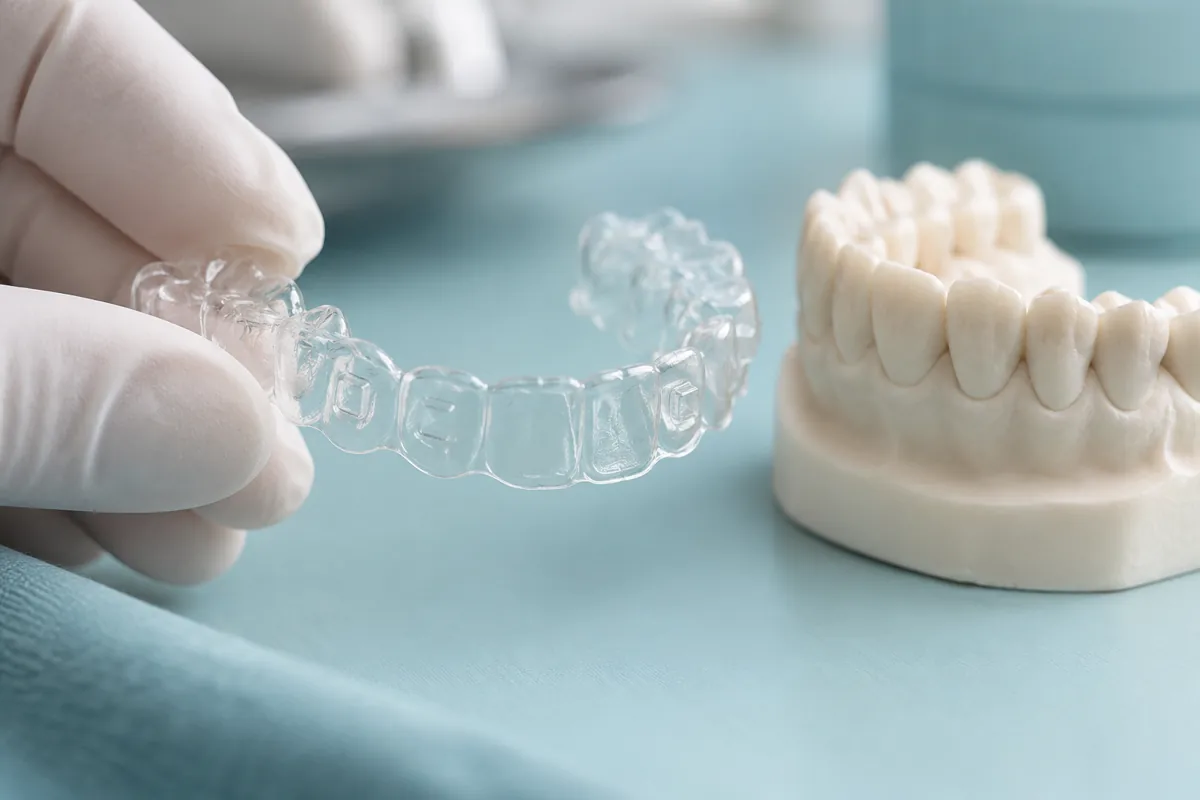
The small raised features used with aligners have a specific purpose. Learn what to ask, how to care for them and when to contact the clinic.
When picturing clear orthodontic treatment, many people think only of a thin tray fitting over the teeth. It can therefore be surprising to discover that the plan includes small raised shapes bonded to certain teeth. These are usually called attachments and help some treatments deliver the planned forces.
Learning about them beforehand avoids unrealistic expectations. Their number, shape and position depend on the plan; they are neither decoration nor a measure of how severe a case is. This guide supports a conversation during your assessment for adult orthodontics in Seville, without replacing the specific instructions of the team treating you.
What attachments are used for
Aligners must fit over the teeth to carry out planned movements. Tooth-coloured material is added to some teeth to provide a surface for the aligner to grip. Its precise role varies with the movement being controlled, the anatomy and the treatment design.
Not all aligners use the same features, and not every patient has the same number. Comparing them with another person’s is not useful: two smiles that look similar in a photograph may have different needs. If their appearance concerns you, ask where they will be placed and why each area needs them before starting.
Clear does not mean completely undetectable
Discretion is a valued feature of aligners, but no treatment should be presented as invisible in every situation. Tray edges, attachments and some additional components can be noticeable up close or under certain lighting. Explaining this from the outset allows an informed choice without surprises.
If you work with the public or have an event coming up, mention it at your consultation. This does not mean altering the plan to hide every component; it allows the team to show you what to expect and discuss your priorities. Function and health must come before an absolute cosmetic promise.
How attachments are usually fitted
The procedure takes place at the clinic according to the treatment plan. The tooth surface is prepared, bonding material is used and the aligner fit is checked. The precise sequence depends on the system and the case. These are not components for patients to glue or reposition at home.
Before leaving, practise putting your aligners in and taking them out under supervision, and ask about any area that feels more resistant. Learning the technique then is better than discovering at night that you cannot remove the appliance without pulling hard. This first check also identifies uncomfortable edges and covers what to do if a problem develops.
What you may notice at first
When you remove the trays, your lips or tongue may notice the texture of the attachments. Experiences vary. Adjusting often takes patience, but severe discomfort, a sore that is not improving or a sharp edge warrants advice. Do not assume every discomfort is an unavoidable part of treatment.
Do not file or polish attachments yourself. Changing their shape can alter the intended grip and damage the tooth. If the problem is an aligner edge, avoid making large improvised cuts: describe it and follow the clinic’s instructions. An apparently small detail may serve a purpose that is not obvious to the eye.
Removing an aligner without forcing it
Learn the specific technique with the clinician, who knows your tray design and bonded components. The aim is controlled removal without sharply bending the appliance or repeatedly pulling from one resistant point. Fingernails, existing crowns and manual dexterity may also affect which aids are appropriate.
Practise when you have time, in good light and over a surface where you will not lose the appliance. If a recommended removal tool is used, learn to handle it before taking it out with you. There is no need to be fast on day one. A calm routine protects the tray and helps you recognise a change in fit.
Cleaning around attachments
Attachments create small irregularities that can make some areas harder to reach with a toothbrush. Review your technique at the clinic, especially around the gumline. Brushing harder is not necessary: directing the brush properly and checking for remaining debris are more useful.
Keep interdental cleaning suited to your spaces and clean the aligners as instructed. Storing a dirty appliance or putting it over uncleaned teeth after eating makes daily care harder. If staining or bleeding develops, seek advice to distinguish hygiene problems from other factors. Follow-up in preventive dentistry remains important during alignment.
What to do if an attachment seems to have come off
It is not always easy to tell whether an attachment is missing or the area never had one. If you notice a change, check calmly and contact the clinic. Mention the side, approximate tooth and whether the aligner still fits. A photograph may help communication, although it cannot replace an assessment when one is needed.
Do not try to glue material on or move ahead to another tray to compensate. Equally, do not stop wearing aligners for several days without asking. The team will advise whether to keep the current tray, bring a visit forward or address the issue at your planned review. The response depends on that attachment’s purpose and the treatment stage.
Eating, drinking and storing the appliance
Your instructions should specify when to remove aligners and which drinks are compatible with wearing them. Avoid generalising from other people’s experiences or promotional videos. Heat, coloured drinks and accumulated debris can affect the care of both appliance and teeth.
A rigid case is a simple useful measure. Wrapping an aligner in a napkin during a meal increases the risk of accidentally throwing it away. If you spend many hours out, prepare a realistic small cleaning kit. Organisation reduces interruptions and makes following instructions easier without turning every meal into a complication.
Attachments, elastics and other components are different
A treatment can include components serving different purposes. Attachments are bonded to selected teeth; elastics or other aids are used where the plan requires them. A new component does not necessarily mean a problem has arisen: it may have been planned for a later stage.
Ask for a clear explanation of the schedule. Knowing which parts depend on you makes instructions easier to remember. Where elastics are prescribed, the attachment points and wearing schedule are specific and should not be copied from someone else. If you forget how to fit them, request another demonstration rather than improvise forces in the wrong direction.
How attachments are removed when no longer needed
Removal is carried out by the clinician, who takes away the material and checks the tooth surface. It should not be attempted at home or hurried with household tools. Some attachments may be removed before others depending on progress, and their removal does not always mark the end of the entire treatment.
Afterwards, confirm your retention instructions and next review date. Achieving the intended position is one stage; keeping it requires its own plan. Read more about this part of the process in our information on adult orthodontics.
What should be clear before you decide
Ask whether your proposal includes attachments or other components, what happens if you lose an aligner and how problems are managed. Check what reviews include and which circumstances might require new records or planning adjustments. These everyday issues often affect your experience more than a promotional photograph.
At Dental Cárabe in Los Remedios, you can request an assessment and explain how discreet you need treatment to be and what your daily routine involves. The best decision rests on an understandable clinical plan and honest expectations about the appliance’s appearance, use and maintenance.
Sources and editorial approach
This information guide was prepared on 27 October 2026 to support an informed conversation with your dental team. It does not replace an examination or constitute an individual clinical review. Recommendations are adapted to each person’s diagnosis, medical history and progress.
Contains public sector information available under Open Government Licence v3.0. The content has been adapted to the Spanish context; the organisations cited do not endorse this clinic or this adaptation.


