
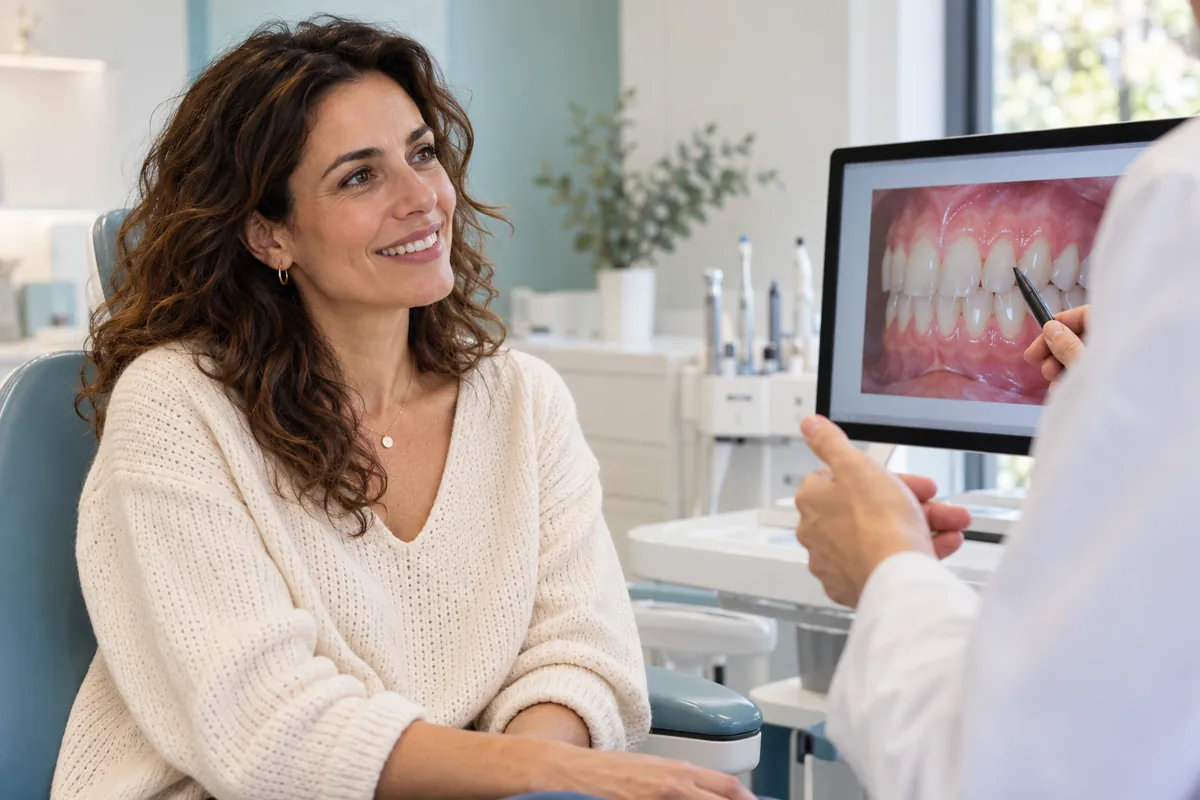
Straightening teeth starts with understanding their support. What to check before adult orthodontic treatment and how to coordinate gum health, your bite and your goals.
The decision to start orthodontic treatment often begins in front of a mirror: a rotated incisor, a gap that was not there before, or a smile you do not quite feel comfortable with. In an adult mouth, however, tooth position is only one part of the assessment. Your gums, supporting bone, older fillings and the way you bite help determine which movements make sense and in what order.
The good news is that getting older does not automatically rule out orthodontics. What changes is the need for informed planning. At Dental Cárabe in Los Remedios, Seville, an assessment for adult orthodontics considers the health of the whole mouth, rather than treating the choice of appliance as a separate decision.
What is assessed before moving a tooth
A tooth is not welded to the bone. It is surrounded by tissues that respond to treatment forces, and this environment needs assessing first. The examination checks gum health, plaque, bleeding and areas where support may have been lost. It also matters whether a tooth is loose, whether biting causes pain, or whether there are problems that need treating beforehand.
The assessment may include photographs, bite records and X-rays where these provide useful clinical information. Not everyone needs exactly the same tests. An examination should answer specific questions: what problem are we trying to correct, what biological limits apply, and what risks come with each option? An attractive simulation cannot replace that assessment.
Bleeding: a sign worth discussing
Bleeding when you brush should not become a familiar detail that you ignore. It may accompany inflammation, although diagnosis requires an examination. Before starting tooth alignment, explain when bleeding occurs, whether it affects a particular area and whether it has changed recently. Mention previous professional cleaning or periodontal treatment too.
The answer is not to stop brushing the area or choose a strong mouthwash on your own. Identifying the cause and receiving tailored instructions are what matter. If periodontal disease is active, the team may recommend stabilising it before moving teeth. Read more about this approach on our periodontal care page.
A history of gum disease does not automatically rule treatment out
Someone who has had gum treatment may wonder whether orthodontics is permanently off the table. Age alone, or a photograph of a smile, cannot answer that question. The decision depends on the diagnosis, remaining support, stability achieved and ability to keep up with hygiene and reviews.
Some cases require particularly close coordination between periodontal and orthodontic care. This may change the goals, sequence or frequency of monitoring. Ask for both the possibilities and limitations to be explained: not every desired position is advisable, and a moderate, stable improvement may be a more sensible goal than pursuing an idealised image.
The appliance is chosen after the diagnosis
Aligners and fixed braces are tools for carrying out a plan. Comfort, discretion and daily habits matter, but so do the movements required and the condition of your mouth. Choosing a brand first and then trying to fit your case to it reverses the decision-making process.
If you prefer aligners, be honest about your routines. Removing them to eat can make some cleaning tasks easier, but requires discipline and organisation. If remembering wear times or losing appliances worries you, discuss this beforehand. With fixed braces, you will need to learn to clean areas where plaque collects. Neither option makes gum care optional.
When there are fillings, crowns or missing teeth
Previous restorations are not a minor detail. A crown, bridge or missing tooth can influence planning and the treatment sequence. Bring reports of previous treatment and explain if a restoration moves, breaks repeatedly or changes the way you chew.
Sometimes tooth position is considered first and the final restoration afterwards; in other cases, a functional need must take priority. The useful question is not simply ‘Can I have orthodontics?’ but ‘Which order avoids unnecessary treatment?’ Coordination with dental prosthetic treatment or conservative dentistry helps create a complete plan.
What a realistic goal means
Before discussing months, clarify what you want to achieve. It might be easier cleaning, closing a gap, improving crowding, balancing certain contacts or making space to replace a tooth. If everything is summed up as ‘I want perfect teeth’, it is difficult to check whether the proposal addresses your priorities.
Bring two or three concerns in order of importance. Explain what worries you about treatment and what changes you do not want. A reference photograph can help the conversation, but should not become a promise to reproduce someone else’s anatomy. The outcome needs to suit your teeth, tissues, bite and ability to maintain it.
Learning good hygiene before treatment begins
The best time to identify brushing difficulties is before fitting an appliance. Ask to be shown how to clean areas where you accumulate more plaque and to check whether the technique is practical for you. The right tool depends on the spaces and your dexterity; buying lots of accessories without knowing how to use them is not the aim.
Build interdental cleaning into a routine you can maintain when you are tired after work or away from home. If a tool hurts or does not fit, ask how to adapt it. Hygiene may need adjusting during orthodontic treatment, and reviewing it is part of your care. The aim is to progress with alignment while protecting the tissues supporting your teeth.
Follow-up is about more than changing appliances
A review checks whether movements match the plan, as well as the gums, hygiene, contacts and any discomfort. Reporting a problem does not mean treatment is failing. On the contrary, mentioning a change early helps the team decide whether simple advice is enough or an earlier visit is needed.
Do not wait for your next appointment if you notice marked new looseness, persistent pain, increasing inflammation or an appliance causing injury. Do not change the aligner schedule yourself to make up for missed days. Individual instructions take priority over generic online calendars. Seek assessment promptly for severe symptoms or substantial swelling.
Preparing for your first consultation in Seville
Bring a list of medicines, relevant medical history and previous dental treatments. You do not need a perfectly written history: a short list helps avoid forgetting important points. If you have recent X-rays, say where they were taken so the team can assess their usefulness rather than assume they always need repeating.
Note any scheduling limitations and regular travel. A workable plan must include reviews, not just the starting date. At Dental Cárabe you can request an assessment at C/ Asunción 78 and explain your concerns about your smile. Understanding your starting point comes first; choosing treatment comes afterwards.
Questions that help you compare proposals
Two proposals may describe similar appliances while pursuing different goals. Ask what the assessment includes, how periodontal health will be monitored, what would happen if the plan needed changing and how final retention is organised. Also ask whether any restorations you might need are included in the quotation or assessed separately.
A clear explanation should let you describe the plan in your own words: what will be treated first, what the team will try to correct, what limitations have been identified and what depends on your participation. You do not need to decide immediately if questions remain. Understanding the sequence helps you choose calmly and maintain useful expectations throughout follow-up.
Sources and editorial approach
This information guide was prepared on 27 October 2026 to support an informed conversation with your dental team. It does not replace an examination or constitute an individual clinical review. Recommendations are adapted to each person’s diagnosis, medical history and progress.
Contains public sector information available under Open Government Licence v3.0. The content has been adapted to the Spanish context; the organisations cited do not endorse this clinic or this adaptation.


